Building a Real Estate Investor Lead Generation System With Automation Software
A real estate investor lead generation system usually breaks in the same place: not at the top of the funnel, but in the gap between first contact and disciplined follow up.
Most investors can get some level of lead flow. They can pull property data, buy a list, run text message marketing for real estate, send direct outreach, or answer inbound calls from a website. The harder part is what happens next. A seller replies at 8:17 p.m. Someone misses the call while driving to an appointment. A distressed owner asks a basic question on a Sunday afternoon. An acquisitions rep means to call back in ten minutes and gets pulled into something else. By Tuesday, that lead has gone cold.
That is why real estate automation software matters. Not because software replaces the operator, but because it keeps the operator from dropping the ball. For wholesalers, buy and hold investors, fix and flippers, and acquisitions teams, the real edge is not simply finding motivated seller leads. It is building a real estate follow up system that responds fast, stays organized, and keeps moving conversations forward when the team is busy.
The best systems are boring in the right way. They route leads, trigger automated SMS, log conversations, and create structure around seller lead follow up. Once that foundation is in place, AI for real estate investors starts to become useful. Without the foundation, even strong real estate AI tools turn into noise.
What a working investor lead system actually needs
A lot of investors shop for real estate investor software by asking what platform has the most features. That is usually the wrong question. The better question is whether the system can reliably handle the handoff between marketing, contact, qualification, and appointment setting.
A practical setup needs five things:
- A steady source of seller leads or inbound inquiries
- A central real estate investor CRM to track every conversation
- Automated lead follow up across SMS, calls, and related channels
- Clear lead management rules so no prospect sits untouched
- Compliance controls for texting and calling
That sounds simple. It rarely stays simple once volume increases.
When an investor moves from a handful of conversations per week to dozens or hundreds, lead nurturing real estate style becomes an operations problem. Now every new lead has to be tagged, assigned, responded to, and worked through a repeatable sales pipeline. If your team cannot see who replied, who needs a second touch, who booked, and who went dark, then you do not really have a real estate lead management process. You have scattered activity.

This is where a dedicated investor CRM earns its keep. A general CRM can store names and notes. A CRM for real estate investors needs to support the kind of communication pattern investors actually use, especially high volume SMS for real estate investors, calling, missed call handling, and persistent follow up over time.
The real role of automation in real estate acquisitions
There is a tendency to treat automation like a magic switch. Turn it on, and suddenly the seller pipeline fills itself. That is not how it works in the field.
Automation does not create motivation out of thin air. It does three more useful things. First, it speeds up first response. Second, it makes consistency possible. Third, it gives your team more at bats without adding the same amount of labor.
If a lead comes in from PPC, SEO, cold calling, or SMS outreach, the first few minutes matter. A missed call text back can keep that lead engaged instead of letting it drift to a competitor. An automated text messaging sequence can acknowledge the inquiry, confirm the property, and keep the conversation alive until a human is free. That is not hype. It is process discipline.
A lot of real estate investor follow up fails because teams rely on memory and goodwill. Someone says, “I’ll get back to them after lunch,” and the follow up never happens. Real estate follow up automation fixes that weak point. It turns good intentions into triggered actions.
There is also a psychological benefit. Sellers often contact multiple buyers. The investor who responds quickly and professionally tends to earn more trust, especially when the seller is under pressure. Fast response does not replace rapport, but it opens the door to it.
Where REI Reply fits into the stack
REI Reply is positioned as a real estate investor CRM and follow up system built specifically for real estate investors. Based on its public positioning, it is designed for wholesalers, fix and flippers, buy and hold investors, and acquisitions teams that are already running channels like PPC, SEO, cold calling, or SMS outreach. That distinction matters. It is not presented as a lead provider in the broad sense. It is framed as a conversion engine for leads already being generated.
That is a useful way to think about the platform category as a whole. If your marketing is weak, no CRM for real estate investors will rescue the business by itself. But once lead flow exists, a platform that combines inbound and outbound calling, SMS, missed call text back, and AI voice assistants in one place can tighten the whole system.
REI Reply also states that a subscription includes access to verified motivated seller data through REI AI Leads. For some operators, that may help close the gap between lead generation and lead handling. Even then, the same rule applies: data is only valuable if the team has a functioning real estate sales pipeline to work it.
Its marketing also says the AI voice agent can qualify leads, book appointments, and follow up around the clock across calls, SMS, email, and socials. In practice, that kind of capability matters most in two scenarios. One is after hours, when live staff are unavailable. The other is when inbound volume is uneven and a team cannot instantly absorb every call or message.
The platform also advertises lead management, automated seller follow up, conversation tools, and text deliverability oriented messaging features. For investors doing real estate SMS marketing at scale, that matters because the problem is not merely sending more texts. The problem is sending messages that actually get delivered, read, and answered.
AI lead follow up is useful, but only when you define the job clearly
The phrase real estate AI gets thrown around so loosely that it often hides the real question: what specific task is the AI supposed to handle?
In an investor operation, AI lead management works best when the scope is narrow and measurable. A voice AI for real estate investors can answer routine questions, collect basic property details, and route warmer conversations to acquisitions. An AI real estate assistant can help with first touch, appointment scheduling, or repeated check ins. AI lead qualification can be useful if the criteria are explicit enough that everyone agrees on what counts as a qualified seller lead.
Trouble starts when teams ask AI to do ambiguous work that depends heavily on judgment, tone, and context. Seller motivation is nuanced. A landlord with a problem tenant sounds different from an heir handling probate stress, even if both own off market properties. If the system is too rigid, it misses intent. If it is too loose, it creates messy data and confused follow up.
The operators I trust tend to use AI follow up as a screening and continuity layer, not as the full acquisitions department. That means AI real estate investing tools do the repetitive work well, while humans handle negotiation, creative structuring, and the emotional texture of seller conversations.
Building the pipeline from first touch to appointment
A strong real estate lead generation system is less about channels and more about sequencing. Every inbound or outbound lead should enter one operating path.
Start with capture. Maybe the lead came from property owner data, skip tracing for real estate investors, an online form, or a returned text. However it appears, it needs to land in one place. If lead data is split across spreadsheets, phone inboxes, and personal email accounts, your follow up is already compromised.
Next comes immediate response. For inbound calls, missed call text back is practical because it closes the silence gap. For web inquiries or seller text messaging, automated SMS can confirm receipt and prompt the next step. This is where automated text messaging earns far more than its cost. It protects the lead in the first minutes, when attention is highest.
Then you need qualification. That can happen through a human acquisitions rep, an AI phone agent real estate setup, or a blended approach. The point is to gather enough information to decide whether the seller belongs in active pursuit, long term nurture, or a lower priority queue. If you skip that stage, every lead gets treated the same, and teams waste time.
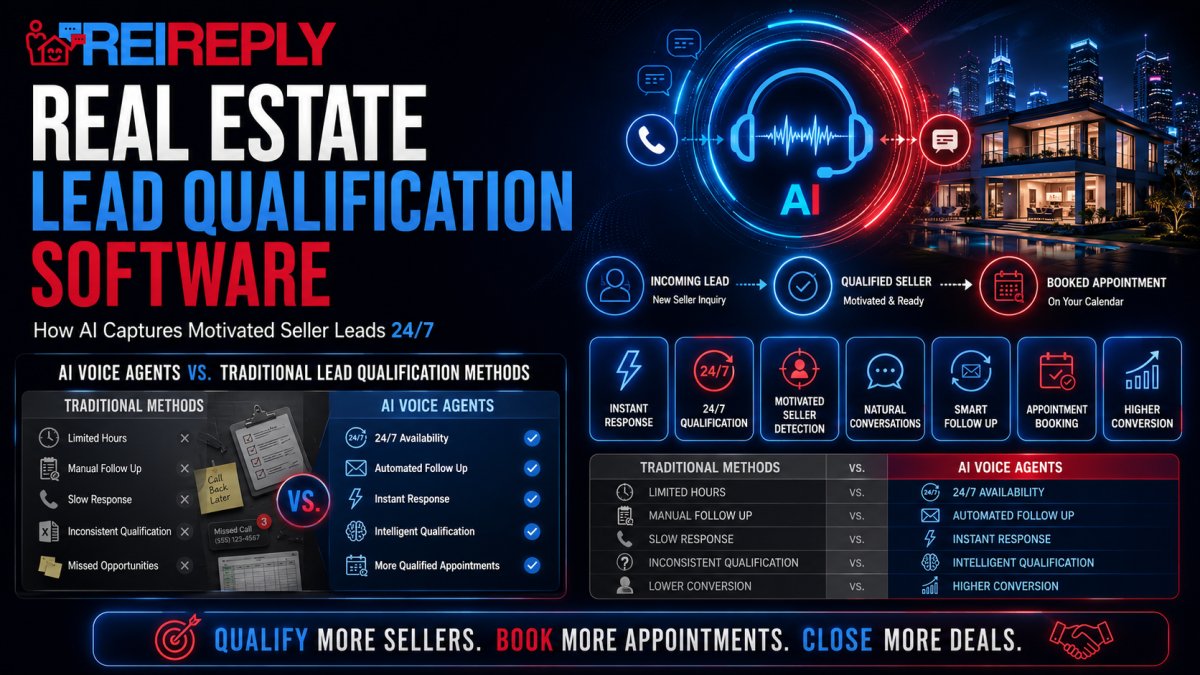
After that comes structured follow up. Most motivated seller follow up does not happen in one contact. Some sellers are ready now. Others need two weeks, two months, or longer. A real estate lead nurturing process should account for that reality. Short term hot leads need dense follow up. Cooler leads need periodic check ins that feel relevant and respectful, not robotic.
Finally, there is handoff to the closer or acquisitions manager when timing and motivation line up. Software should make that handoff visible. If the system cannot show who qualified the lead, what was said, and what the seller expects next, then your team will duplicate effort and lose trust.
Why SMS remains central for motivated seller lead generation
For many investors, SMS follow up is the backbone of the system because it is fast, scalable, and easier to manage between field appointments than live calls alone. Real estate investor texting also creates a written thread, which helps teams maintain continuity when leads pass between staff.
That said, text message marketing real estate campaigns have sharp edges. Deliverability matters. Timing matters. Tone matters. A stiff, over engineered message can produce worse results than a short, plain note that sounds like it came from a competent adult. Even when you are using automated SMS for real estate investors, the message should still read naturally.
This is where some investor focused platforms try to help with message variation and deliverability oriented features. That does not remove the operator’s responsibility. If your messaging is sloppy, vague, or irritating, no SMS automation software will save the campaign. Automated real estate texting is only as good as https://troykldq673.birchreport.com/posts/improving-real-estate-sms-deliverability-with-deliverability-oriented-messaging-features the copy, targeting, and follow up logic behind it.
A practical example: if a property owner replies with “maybe, depends on price,” that lead should not receive the same next message as someone who writes “yes call me asap.” The system needs branching logic, and the acquisitions team needs a clear definition of what each reply type means. Otherwise seller lead automation becomes a blunt instrument.
Skip tracing, property data, and the quality problem
Investors often spend a lot of time discussing quantity, how many records, how many phone numbers, how many distressed property leads. Less attention goes to record quality and workflow readiness.
Property owner lookup, bulk skip tracing, and motivated seller data can be useful, but only when your team knows how to work the output. A huge list without segmentation is just a bigger mess. Property data for real estate investors should answer a business question. Who is most likely to engage? Which lead lists fit your buy box? Which off market property leads deserve immediate effort versus lower frequency nurture?
Even the best real estate lead data is not self executing. You still need campaign logic, message cadence, and a system for handling replies. The more outbound volume you generate, the more important your investor CRM becomes. Data acquisition without workflow discipline usually creates busywork, not more closed deals.
That is one reason a conversion focused platform can be more valuable than another source of off market data. If your response time, categorization, and seller lead follow up are weak, adding more names may simply expose the weakness faster.
Compliance is not a side note
A lot of investors think about compliance only after their messaging starts underperforming or a provider asks questions. That is backwards.
If you are doing SMS marketing for real estate investors or calling property owners, compliance needs to be built into the system design from the start. The FTC states that telemarketers must honor Do Not Call rules, may not use the National Registry or entity specific Do Not Call lists for any purpose other than compliance, and generally may not call outside 8 a.m. To 9 p.m. Local time without prior consent. The FTC also states that prerecorded telemarketing calls require prior signed, written agreement, and that electronic consent can satisfy the requirement if E-SIGN conditions are met.
On the texting side, A2P 10DLC is the U.S. Carrier standard for application to person SMS traffic sent through 10 digit long code numbers, meant to verify messaging and support consensual communication. In practical terms, A2P 10DLC real estate registration and business texting compliance affect deliverability as much as legal hygiene. Investors who ignore it often discover the problem as carrier filtering, inconsistent delivery, or campaign interruption.
A simple compliance baseline looks like this:
- Register and maintain your A2P 10DLC setup correctly for business texting
- Build Do Not Call handling into your CRM and suppression workflow
- Keep outreach within permitted calling hours unless consent supports otherwise
- Treat prerecorded telemarketing calls as a separate, higher risk category
- Use contact data for compliance in the restricted way required
This is one of those areas where process beats improvisation. Real estate SMS deliverability and business texting compliance are not glamorous, but they sit underneath every campaign.
How to decide what should be automated and what should stay human
The cleanest investor systems automate the repeatable moments and preserve human attention for leverage points.
First response is a strong automation candidate. So are appointment reminders, missed call text back, reactivation touch points, and basic lead routing. AI calling real estate workflows may also help with initial screening when a team cannot answer every call live.
What should stay human? Price conversations, objection handling, nuanced motivation analysis, and the kind of listening that makes a seller feel understood. Motivated seller calls often carry emotion, confusion, urgency, or distrust. A script can only take you so far.
There is also a branding issue here. If every touch feels generic, the seller senses it. Real estate investor automation should create continuity and speed, not impersonality. The best systems feel organized, not mechanical.
A useful internal rule is this: automate the action, not the judgment. Let software send the follow up, create the task, log the reply, and route the lead. Let trained people interpret the gray areas.
What a mature system looks like after the setup phase
Once the system is dialed in, the day to day operation becomes less dramatic. Fewer leads get lost. Sellers hear back faster. The pipeline is easier to read. Acquisitions can spend more time on qualified conversations and less time digging through inboxes.
That maturity also changes how you evaluate marketing. Instead of asking only how many leads came in, you can look at where conversion breaks. Are inbound calls unanswered? Are seller leads stalling after first reply? Are appointments being booked but not confirmed? Is a certain lead source producing contacts who never engage? When your real estate lead follow up is structured, those answers become visible.
This is the point where an AI CRM for real estate investors or a specialized investor CRM can start compounding value. Not because it has trendy features, but because it gives the team consistent visibility into the pipeline.
REI Reply is positioned in that operational layer. Its investor specific CRM, calling, SMS, missed call text back, AI voice assistant, and follow up tools reflect the actual communication mix used by many acquisitions teams. For operators already generating real estate investor leads, that kind of system can help reduce leakage between contact and conversion.
The important caveat is that no platform, REI Reply included, absolves the business of strategy. You still need good data, disciplined messaging, realistic qualification rules, and careful compliance. Software can enforce a process. It cannot invent a sound one.
The investors who benefit most from this setup
The best fit for real estate marketing automation is usually not the brand new investor sending a few manual texts on weekends. It is the operator who has enough lead flow to feel the pain of inconsistency. Maybe that is a solo wholesaler juggling too many conversations. Maybe it is a small acquisitions team missing inbound opportunities after hours. Maybe it is a growing shop with PPC, SEO, cold calling, and bulk SMS real estate campaigns feeding into one funnel.
At that stage, the difference between a scattered process and a real estate automation system becomes expensive. Not abstractly expensive, but concretely expensive. Missed callbacks. Unworked follow up. Confused handoffs. Dead leads that were never really dead.
A system fixes that by turning scattered effort into repeatable motion. Lead generation automation captures attention. Automated lead follow up protects it. AI lead qualification can help sort it. A real estate investor CRM keeps the whole thing visible. And disciplined oversight keeps the machinery honest.
That is the heart of building a lead generation system with automation software. Not more noise, more control. Not more tools for the sake of tools, but a tighter way to handle the opportunities you already worked to create.
Ends · RENTALINVESTING308